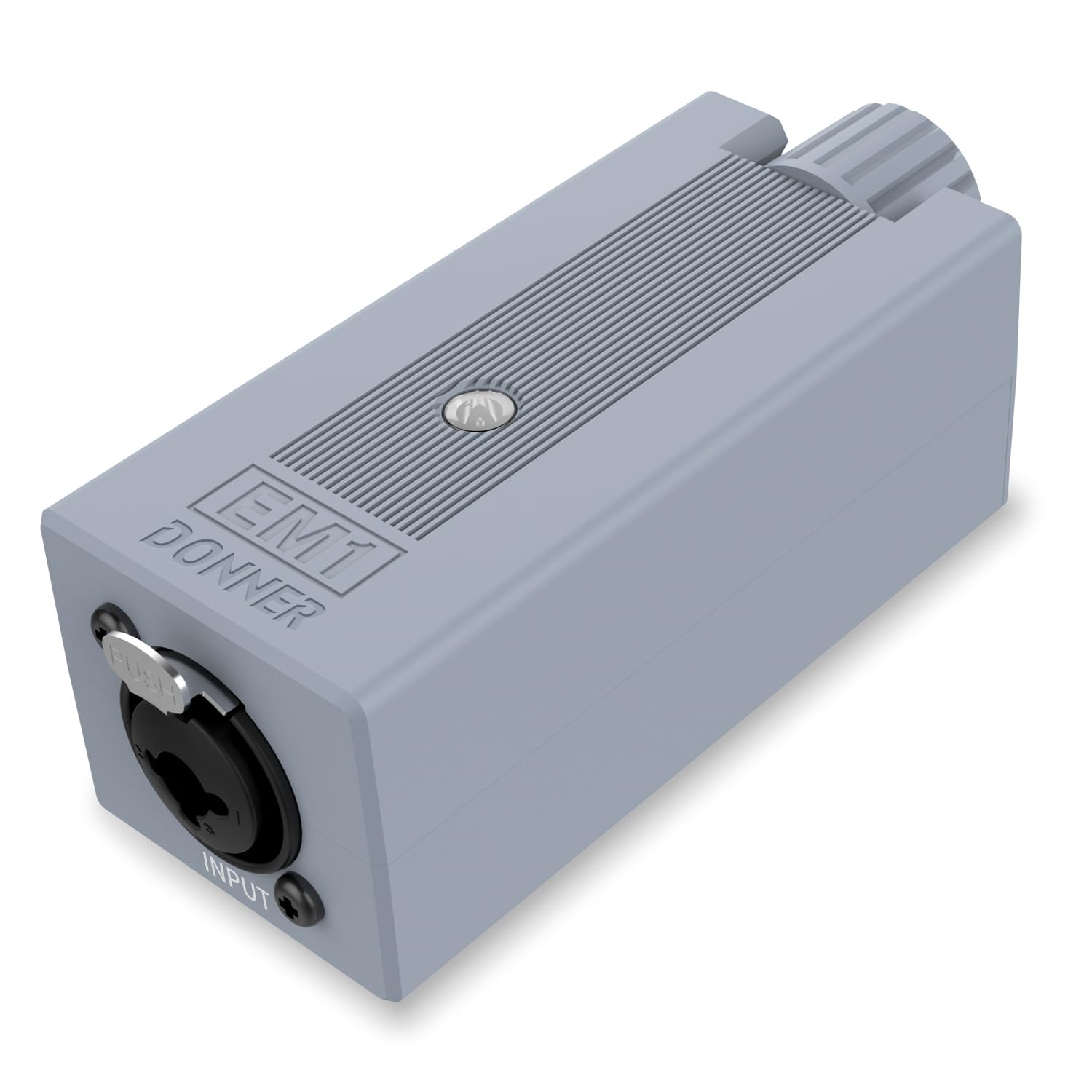
The Donner EM1 is a compact, rechargeable headphone amplifier designed for personal in-ear monitoring, with XLR and TRS inputs and a 3.5 mm output.
This Donner EM1 review looks at who may benefit from its portable setup and what to consider before choosing it.
Donner EM1 Review Summary
The quick verdict
800+ ratings
Read Amazon ReviewsDonner EM1
A portable wired monitor amp for performers who need headphone volume control, flexible XLR or TRS input, and a rechargeable belt-pack setup.
- XLR and TRS input connectors, each described with a locking mechanism.
- 3.5 mm output jack for connecting headphones or in-ear monitors.
- Stereo/mono source switch intended to match the connected cable and source.
- Rechargeable Li-ion battery with a claimed runtime of up to 12 hours.

Pros
- Offers both XLR and TRS input connections.
- Portable belt-pack format with a metallic clip.
Consider before buying
- Does not support microphones, so it cannot serve as a microphone amplifier.
- Buyers must confirm their source signal, cable connection, and stereo/mono needs before relying on it for a monitoring setup.
Read the full review summary
The EM1 brings together a belt-pack form, a solid metallic clip, a rechargeable battery rated for up to 12 hours, and input connections for XLR or TRS cables.
A stereo/mono switch lets users match the mode to the connected source, while a volume control offers a direct adjustment at the listening position.
It may suit musicians or other performers who want a personal wired monitor amplifier that can travel with them and accept either of those input connections.
It is not a microphone preamp: the product description explicitly says it does not support microphones, so buyers should make sure their signal source and cable setup are appropriate.
The buying factors
Donner EM1 Scorecard
Editorial scores reflect listed features and buyer fit; they are not laboratory measurements or customer ratings.
Connection flexibility
XLR and TRS inputs offer two common connection formats, with a stereo/mono switch for adapting to the source.
Portability
The compact design and belt-pack clip are intended to make it easy to carry.
Battery runtime
The rechargeable Li-ion battery is rated for up to 12 hours; actual use may vary.
Personal volume control
A dedicated control allows adjustment on the amplifier, useful when the unit is worn or kept close.
Monitoring focus
Its stated purpose is personal in-ear monitoring, with a 3.5 mm headphone output.
Setup clarity
The input choices and mode switch are useful, but buyers need to confirm their source signal and cable match before purchase.
Key Features and Specifications of Donner EM1
- XLR and TRS input connectors, each described with a locking mechanism.
- 3.5 mm output jack for connecting headphones or in-ear monitors.
- Stereo/mono source switch intended to match the connected cable and source.
- Rechargeable Li-ion battery with a claimed runtime of up to 12 hours.
- Power and battery-charging status indicators.
- Solid metallic belt-pack clip and compact design for carrying the unit.
- Volume control and high-power design intended for professional headphones, including high-impedance models; microphone use is not supported.
Pros and Cons of Donner EM1
Pros
- Offers both XLR and TRS input connections.
- Portable belt-pack format with a metallic clip.
- Rechargeable battery is rated for up to 12 hours.
- Stereo/mono selection accommodates different source and cable setups.
Consider before buying
- Does not support microphones, so it cannot serve as a microphone amplifier.
- Buyers must confirm their source signal, cable connection, and stereo/mono needs before relying on it for a monitoring setup.
- The stated battery life is a maximum, so long sessions may require planning for charging.
Who Should Buy Donner EM1?
Good fit
Consider the EM1 if you need a portable personal headphone amplifier with a 3.5 mm output and your monitoring source connects through XLR or TRS.
The belt-pack clip and onboard volume control make the design practical for performers who want the amplifier within reach while listening.
Its rechargeable battery, status indicators, and stereo/mono switch add useful flexibility for mobile use.
Before buying, check the output from your mixer or other source, confirm which input cable you need, and determine whether your headphones require the high-power design described for high-impedance models.
Who should skip it
Skip the EM1 if your setup requires a microphone input or you need a device that performs functions beyond personal headphone amplification. Also look elsewhere if your source cannot connect through the listed XLR or TRS inputs.
How the Donner EM1 Fits a Personal Monitoring Setup
Input choice and source matching
The XLR and TRS inputs give the EM1 two connection options, and the stereo/mono switch is intended to accommodate the source and cable arrangement.
Check the signal output and cable type at your mixer or other audio source before purchase; connector fit alone does not establish that the signal is suitable.
On-body use and headphone output
A belt-pack clip, compact construction, volume control, and 3.5 mm output are a straightforward combination for a personal wired monitoring position.
The design suggests the unit can stay close to the listener, making its own volume control accessible during use.
Battery planning
The rechargeable Li-ion battery is rated for up to 12 hours, with indicators for power and charging. Treat that figure as a maximum when planning a long rehearsal or performance, and consider when you can recharge between sessions.
Matching the amplifier to headphones
The EM1 is described as a high-power amplifier suited to high-impedance professional headphones, and it is also intended for in-ear monitoring.
If you plan to pair it with a particular headphone model, check that model's connection and impedance needs and confirm the setup will suit your listening level.
Alternatives to Donner EM1
No alternative model is recommended here. Compare the input connections, monitoring format, and portability you need before choosing another option.
Is Donner EM1 Worth It?
The Donner EM1 is worth considering for performers who want a portable, rechargeable personal monitor amplifier with XLR or TRS input, a 3.5 mm headphone output, and a convenient belt-pack format.
Its switchable stereo/mono mode and onboard volume control make it a practical fit for a compatible wired monitoring setup.
Check source compatibility and cable needs before buying, and do not choose it for microphone amplification. The battery rating is up to 12 hours, so plan charging around longer sessions.
Your review at a glance
800+ ratings
Read Amazon ReviewsDonner EM1
A portable wired monitor amp for performers who need headphone volume control, flexible XLR or TRS input, and a rechargeable belt-pack setup.
- XLR and TRS input connectors, each described with a locking mechanism.
- 3.5 mm output jack for connecting headphones or in-ear monitors.
- Stereo/mono source switch intended to match the connected cable and source.
- Rechargeable Li-ion battery with a claimed runtime of up to 12 hours.